
Objects created and processed by docuRob®WorkFlow processes are stored and managed within the docuRob®ObjectManager module. In most cases objects are accessed by business process actions, both User tasks and automatic activities, as well as by applications executed within the process instance.
The object repository may also be used as a self-contained information management platform. Access to object content is provided by the object lists filtered by the metadata attribute values (Figure 1) or via object categorization lists supporting the contextual information analysis.
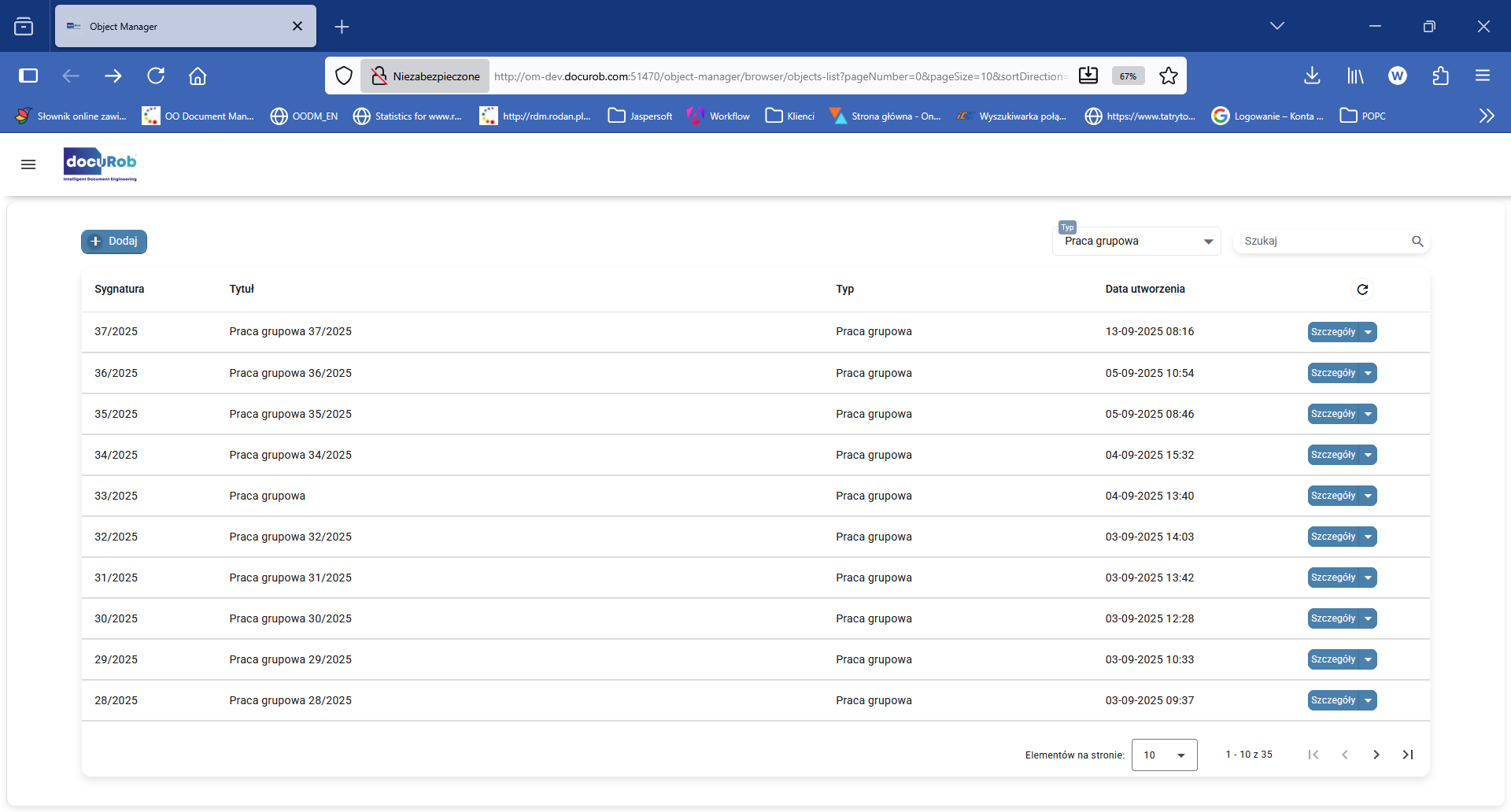
Figure 1. A list of the object type „Groupwork”
Object instances are created and updated manually with the use of the standard user interface comprising the metadata and an electronic form and they may contain an arbitrary number of files of assorted textual and binary formats. The repository may be accessed and updated by the external information systems via the docuRob® Rest API.
The object content should include the metadata attributes and the information content comprising at least one data file. An electronic form used in business process User tasks serves at the graphical object interface supporting a variety of application scripts. The form provides the structural data content that may be used in definition of the categorization trees.
The object definition in the docRob® Ontology Manager knowledge base comprises an optional attribute binding the object type with the electronic form definition. In such cases the form file occurs in the object content as the obligatory element.
Object content may be modified at any point of the object lifecycle by adding or removing files as well as by updating values of the metadata attributes. Above operations may be performed within User tasks of a business process or directly with the use of the services either available as the GUI functions or published as the Rest API elements. Figure 2 present the drag-and-drop function supporting import of a data file into the object structure.
The electronic forms are defined and processed by the docuRob®eForms product to be established as a multifunction obligatory element of the object content. The forms are stored as XML files accessed by the Rest API or by the BPQL functions. The XML files can be used to generate PDF documents.
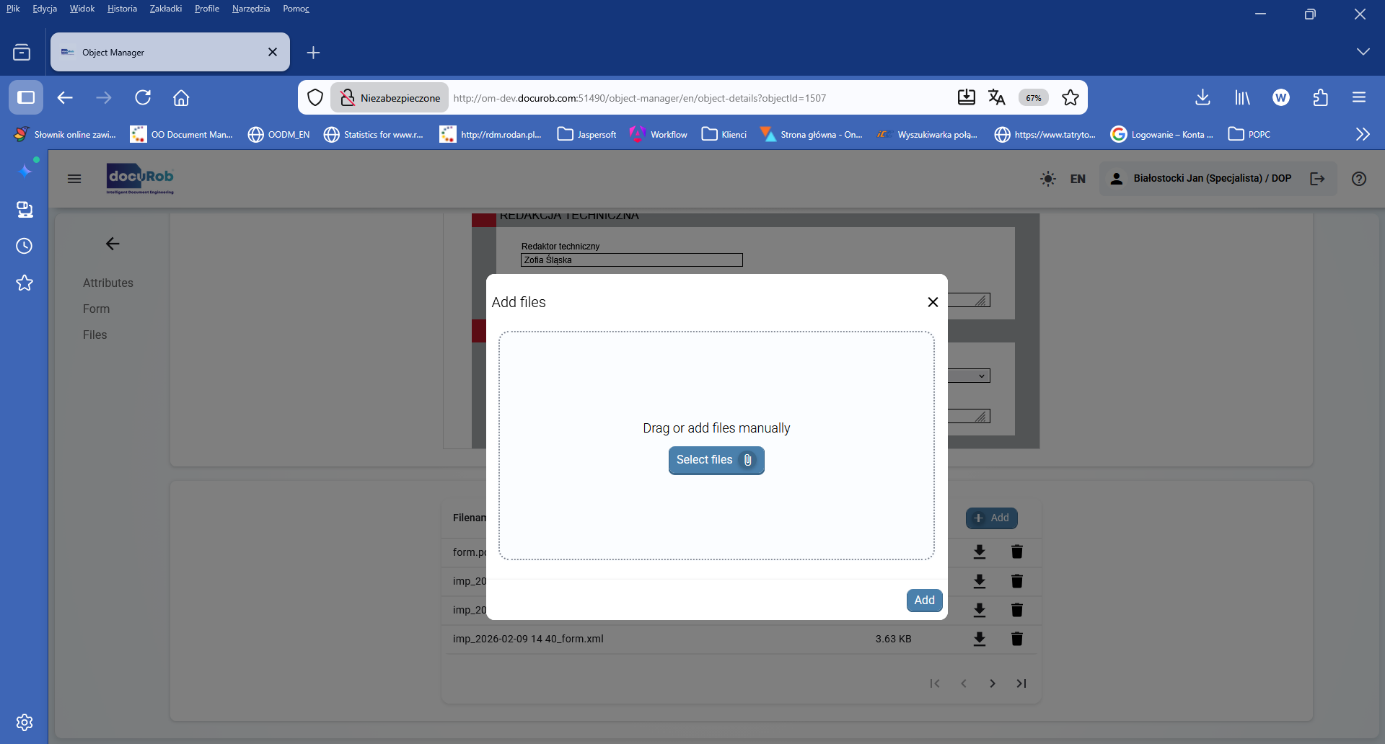
Figure 2. The direct operation to ad fie(s) into the object content
The object edit screen comprises the metadata attributes, the electronic form and a collection od data files. The object view presented in Figure 3 represents the object type Group work serviced by the process identified by the same name.
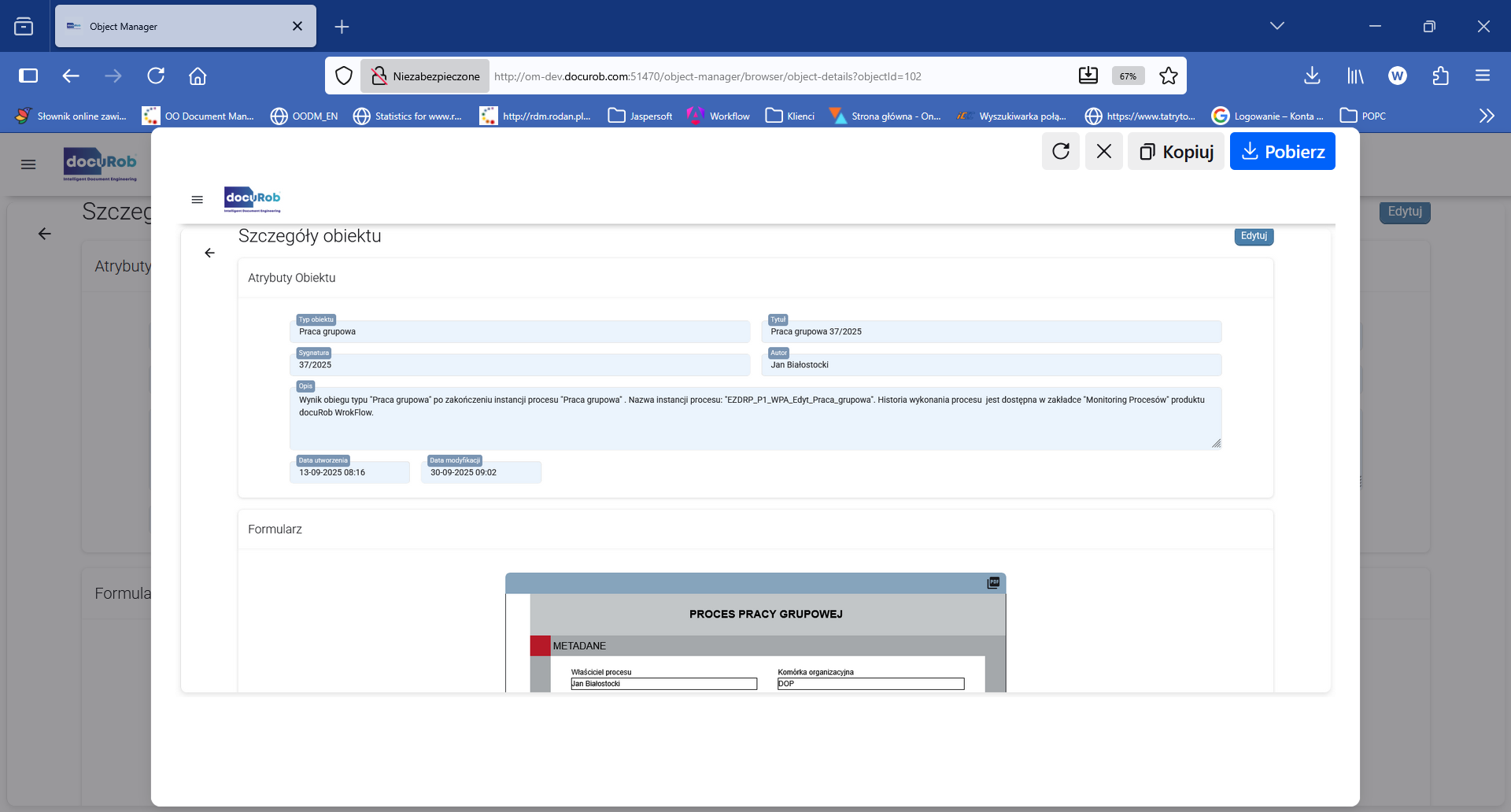
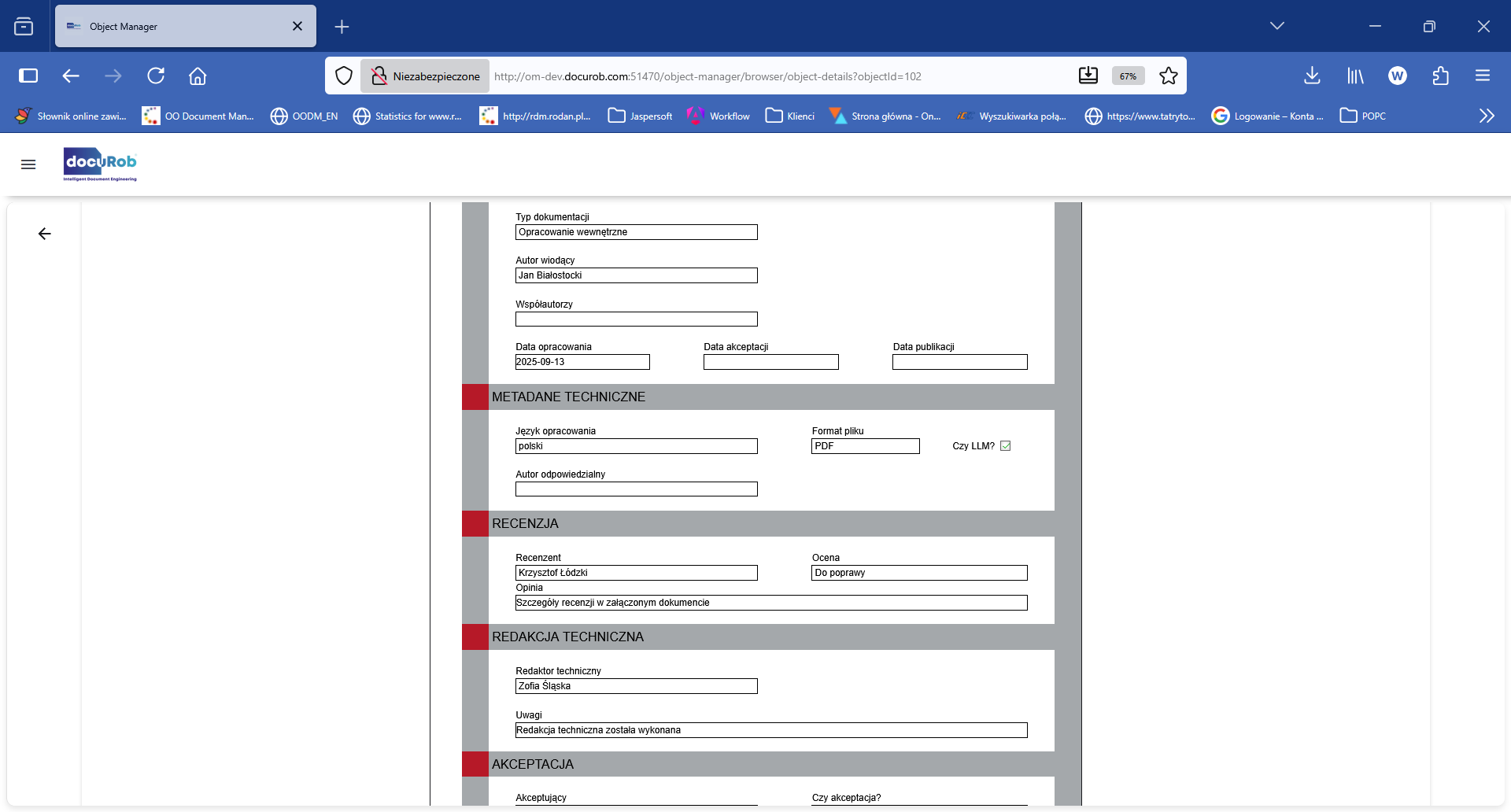
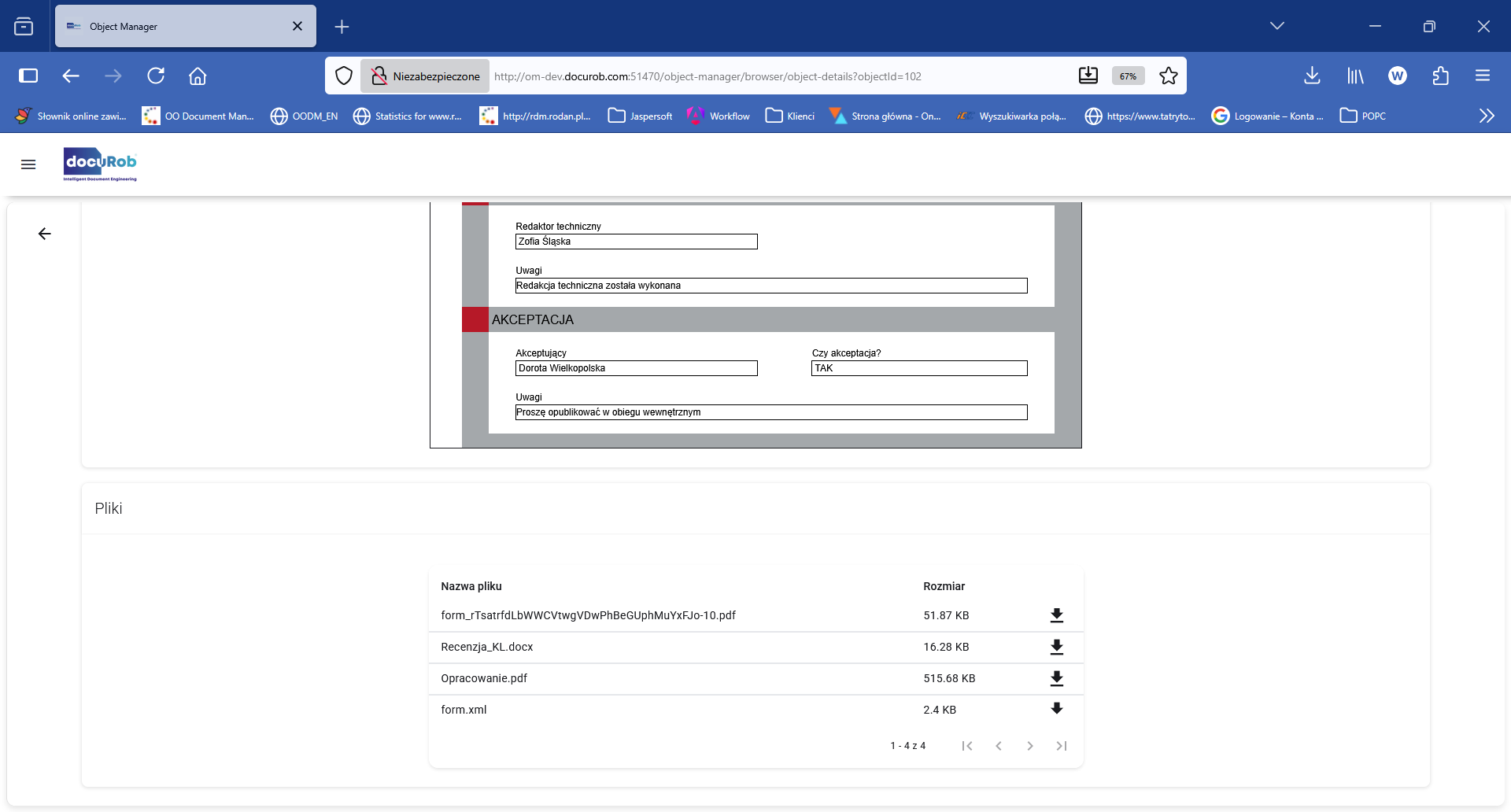
Figure 3. Object content edit screen.
The process definition and the process instance history graph of the Group work process are presented in Figure 4 and Figure 5 respectively. The process controls the flow of a publishing procedure entailing such participant roles as the author(s), the reviewer(s), the editor(s) and the accepting manager. Data concerning the actual performers participating in the process tasks in the above roles are filled into the form at the end of the process execution. Two subprocesses, namely the compound activities nr 2 and 15, are implementing the in and out connectors with the external document management system EZD RP.
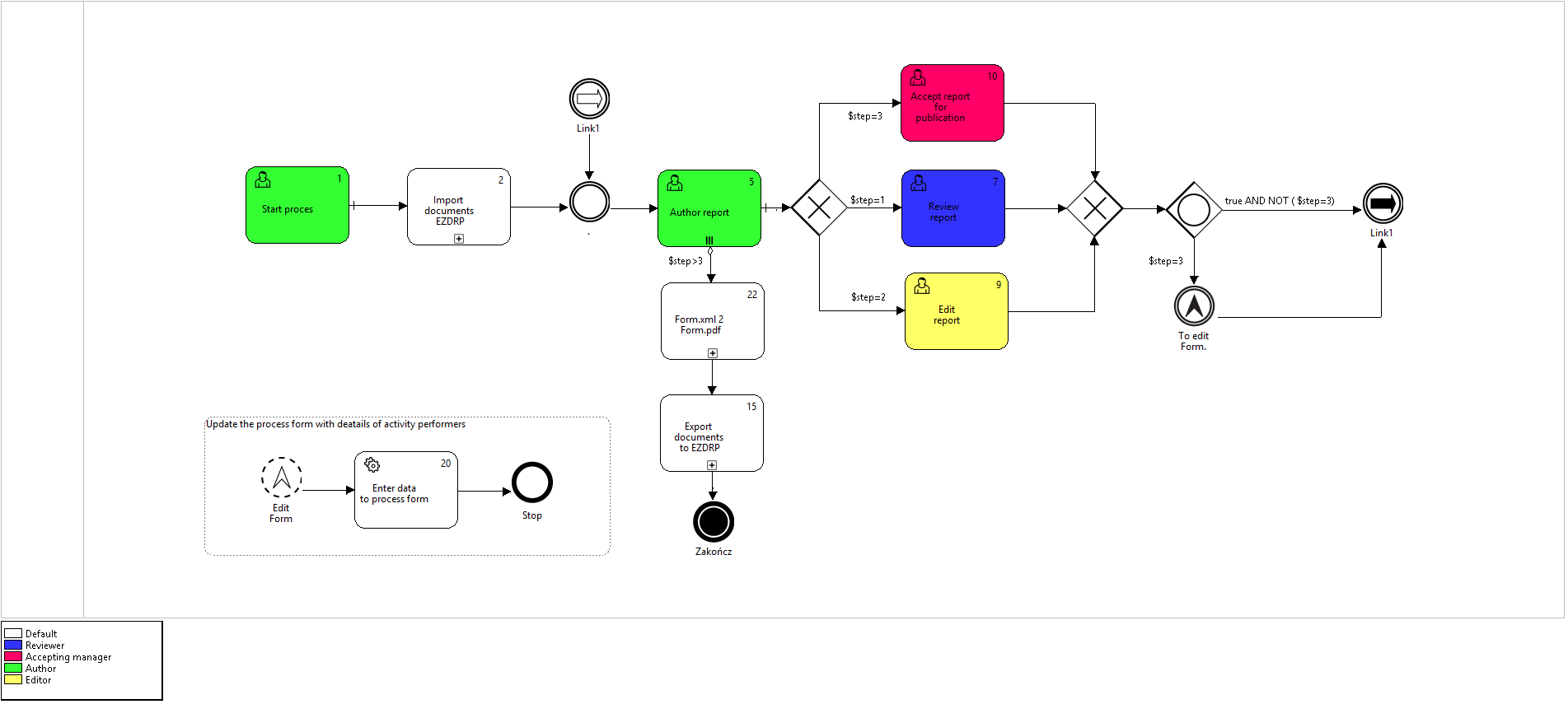
Figure 4. The Group work process definition
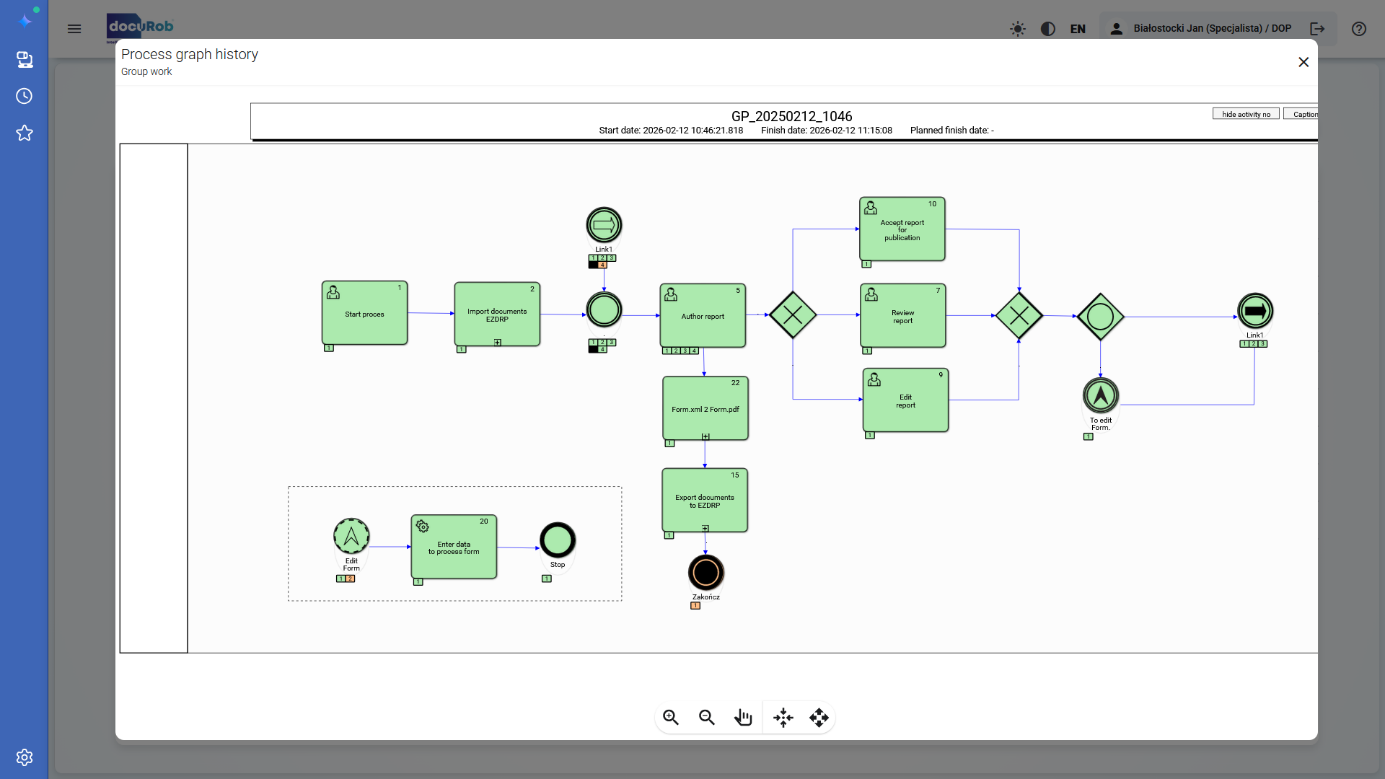
Figure 5. The instance history graph of the Group work process